
EVO-MIND (2026)
- Introduction
EVO-Mind is a platform built for the people gifted programs left behind, adults who aged out of the window where intelligence gets nurtured, and never had the chance to come back to it. We built the identity around that idea from the ground up: brand, app, print, and content, grounded in research from the audience it's actually for.
Year
2026
Industry
EdTech / Cognitive Development
Scope of Work
Brand Identity, UI/UX Design, Social Media, Content & Marketing
Client
EVO-Mind
- The Context
A cutoff nobody questioned.
Gifted programs exist for kids and teens, built on the idea that intelligence stops being worth investing in past a certain age. Nothing exists on the other side of that line. EVO-Mind is built for adults, 20 to 55, with a smartphone and no interest in an expensive, inaccessible program.
- The Research
Before design, we asked.
Gifted programs exist for kids and teens, built on the idea that intelligence stops being worth investing in past a certain age. Nothing exists on the other side of that line. EVO-Mind is built for adults, 20 to 55, with a smartphone and no interest in an expensive, inaccessible program.
- The Brand Identity
A mark built to hold two kinds of mind.
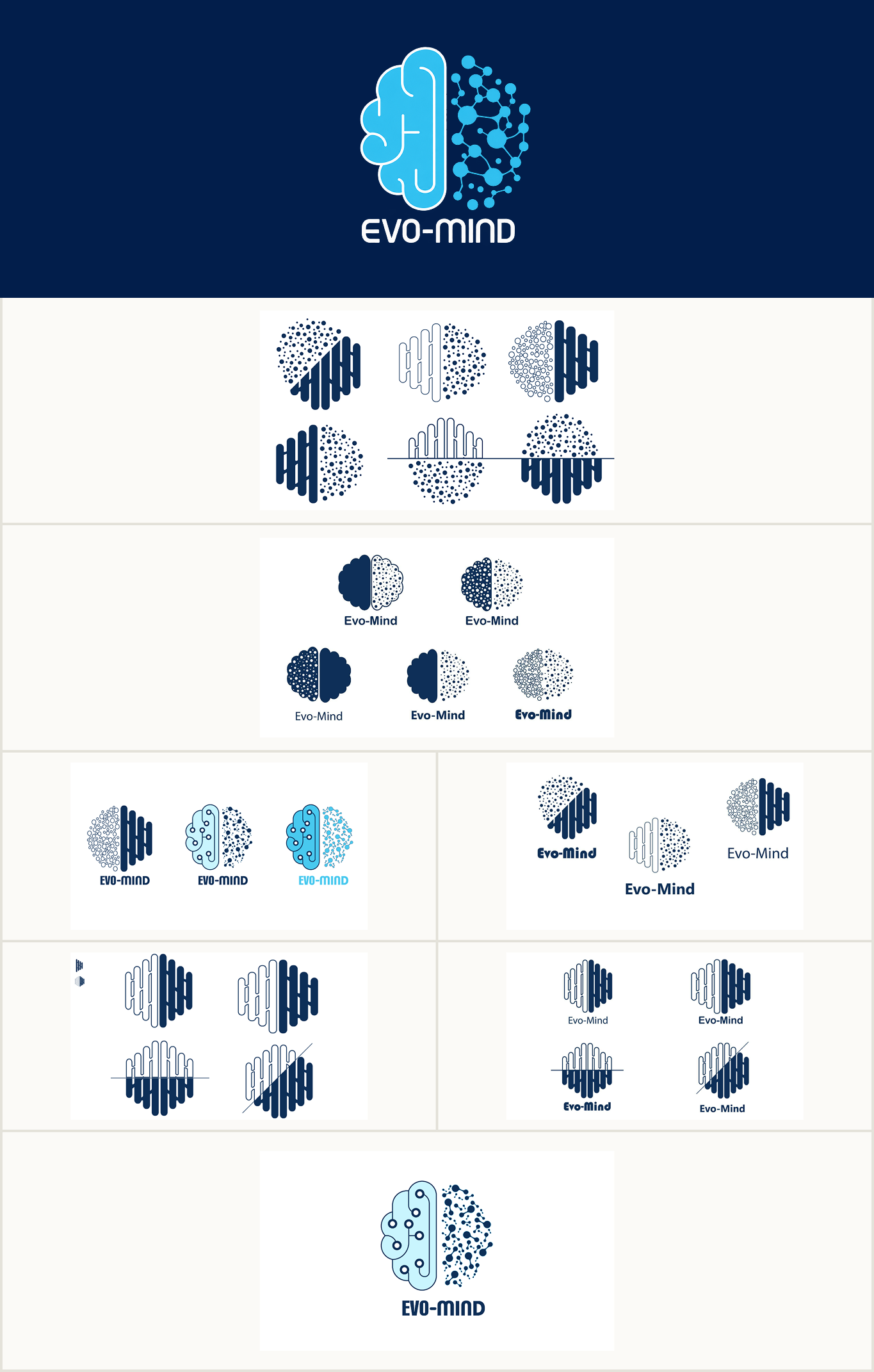
The logo splits a single brain into two languages: one side ordered, circuit-like nodes for IQ, the other loose, scattered dots for EQ. Dozens of variations were explored before landing on the pairing that read as both at once, structured and intuitive, in the same mark.
- App Design (UI/UX)
Built around a life that's already full.
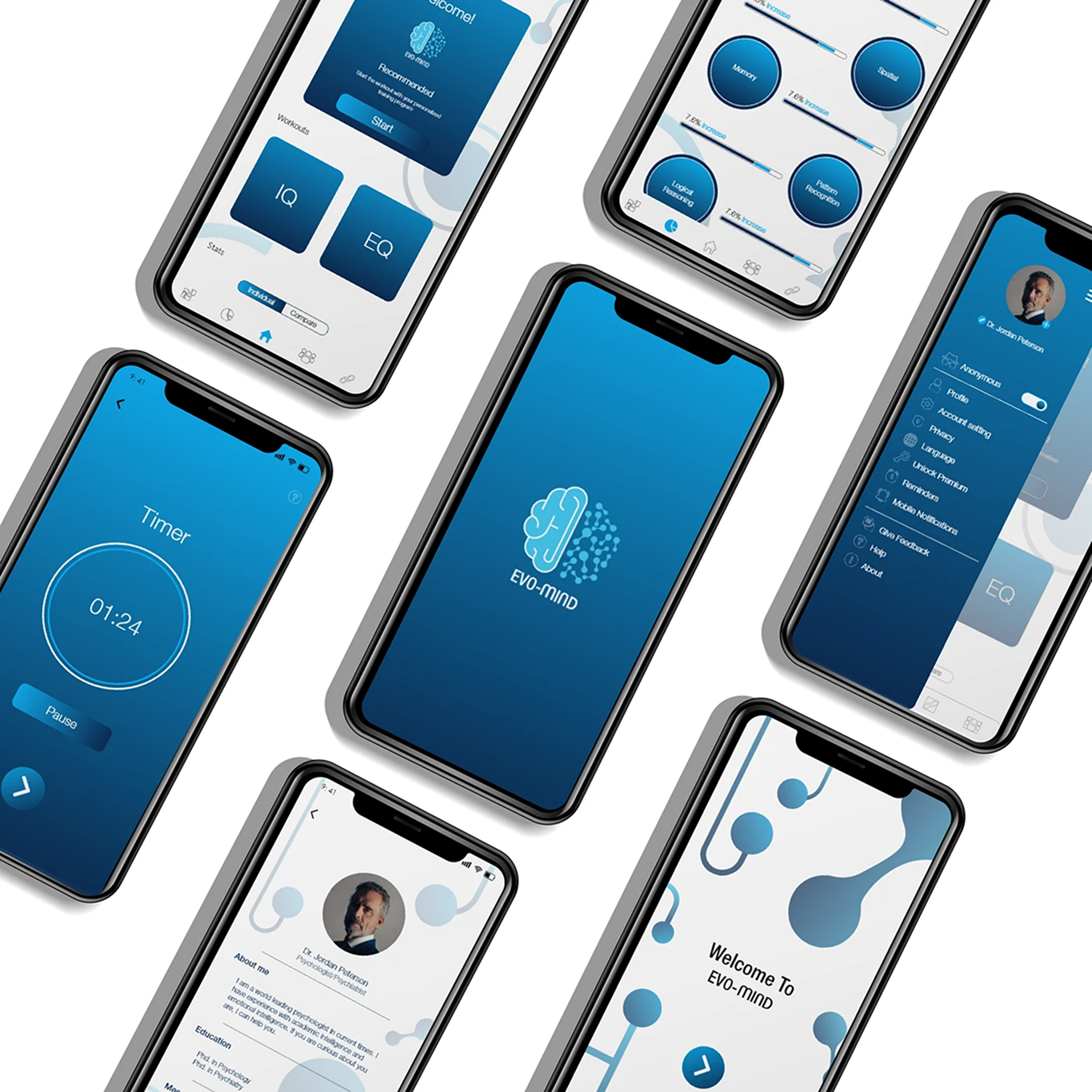
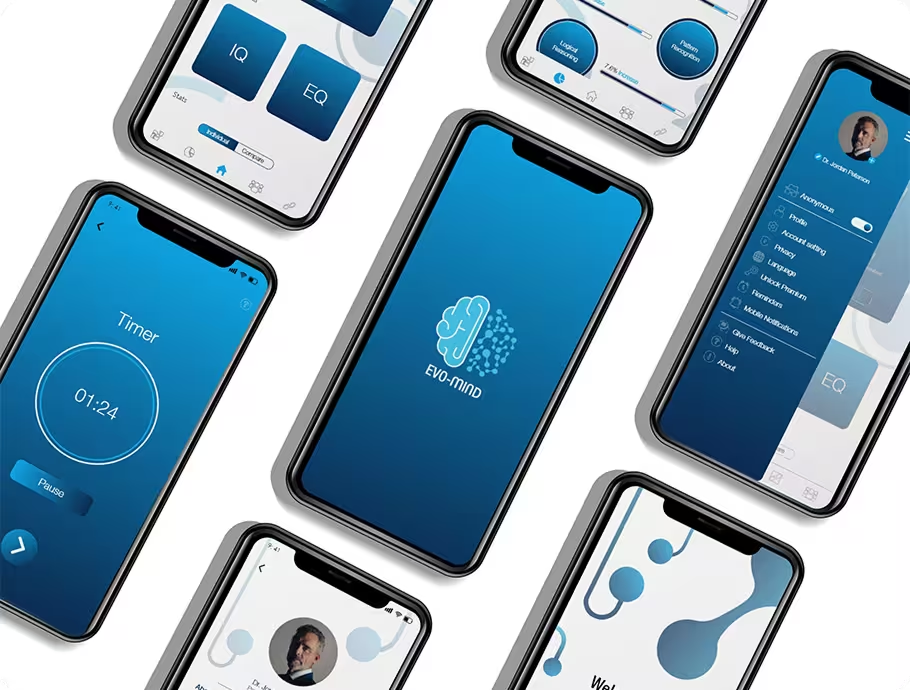
No institution, no fixed hours. The app was designed remote-first: a home screen split cleanly into IQ and EQ paths, timed exercises, progress tracking, and a profile system built for people already juggling university or work, on their own schedule.
- Poster & Content Design
A cutoff nobody questioned.
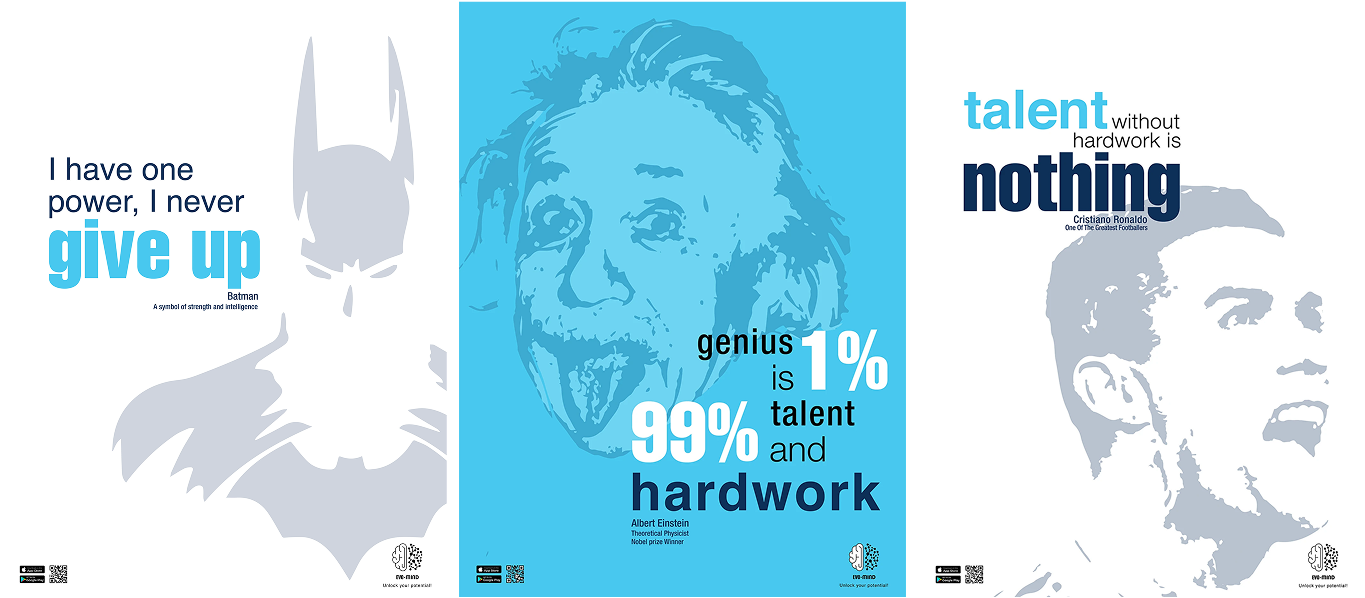
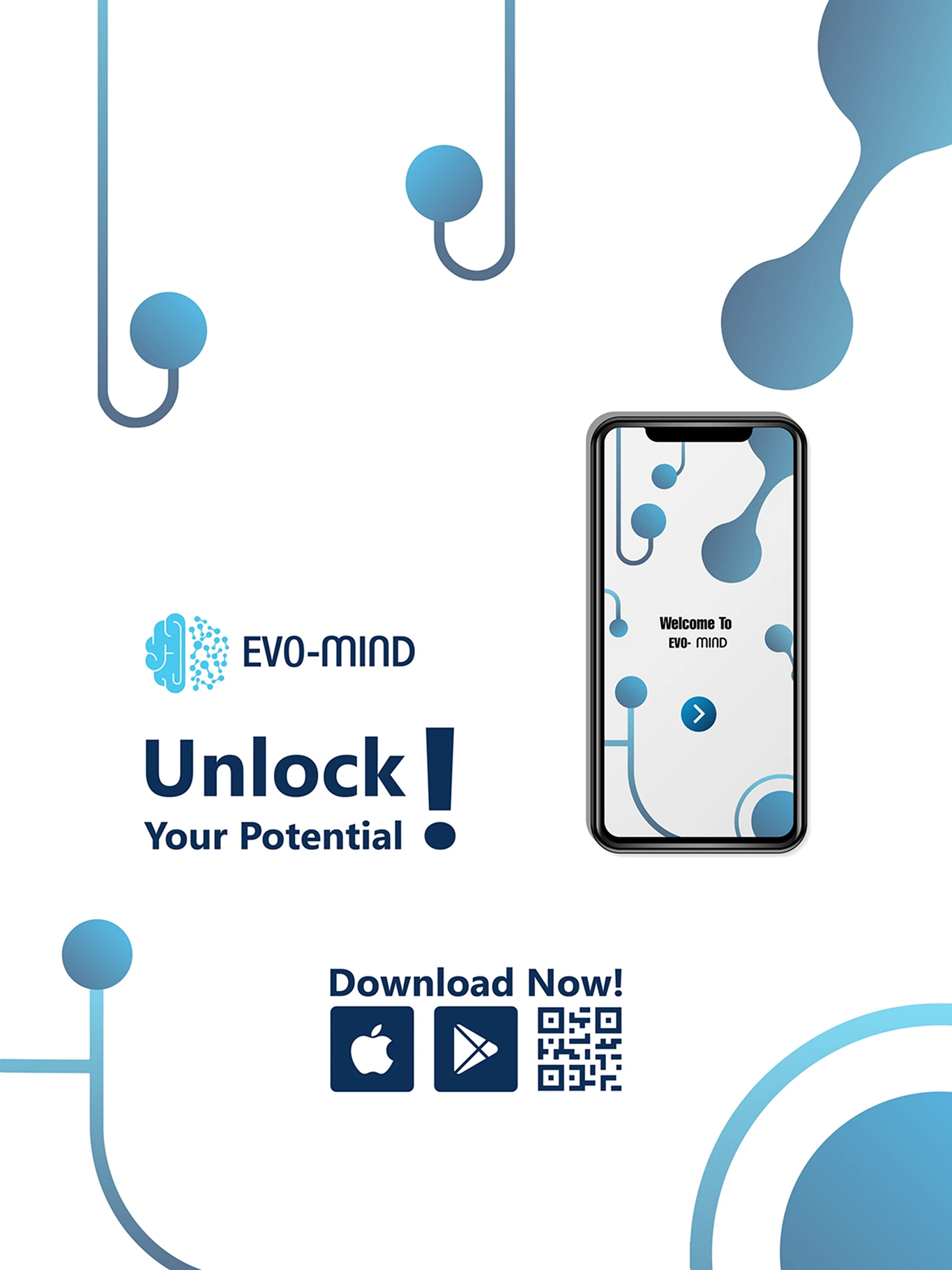
Duotone portraits and blunt, unpolished lines; “Genius is 1% talent, 99% hardwork,” “Talent without hardwork is nothing,” “Are you smart enough to keep up?”, carried the same visual system across print and social.
- Social Media
Teaching the categories of intelligence.
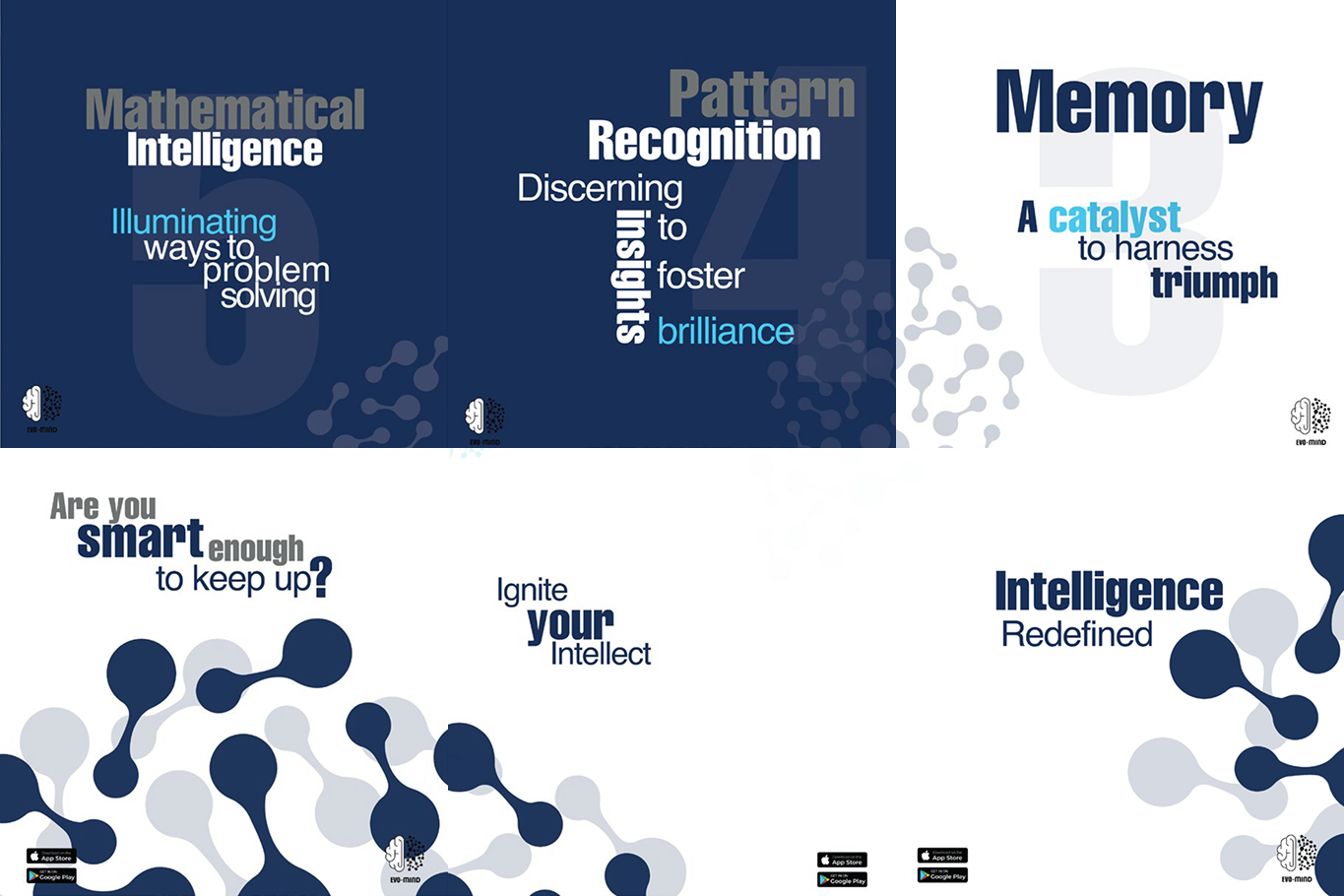
A content series; Pattern Recognition, Memory, Mathematical Intelligence, broke down exactly what EVO-Mind trains into scannable, branded posts, turning the research behind the app into content people could actually learn from.
- The Research, In Numbers
The Research, In Numbers
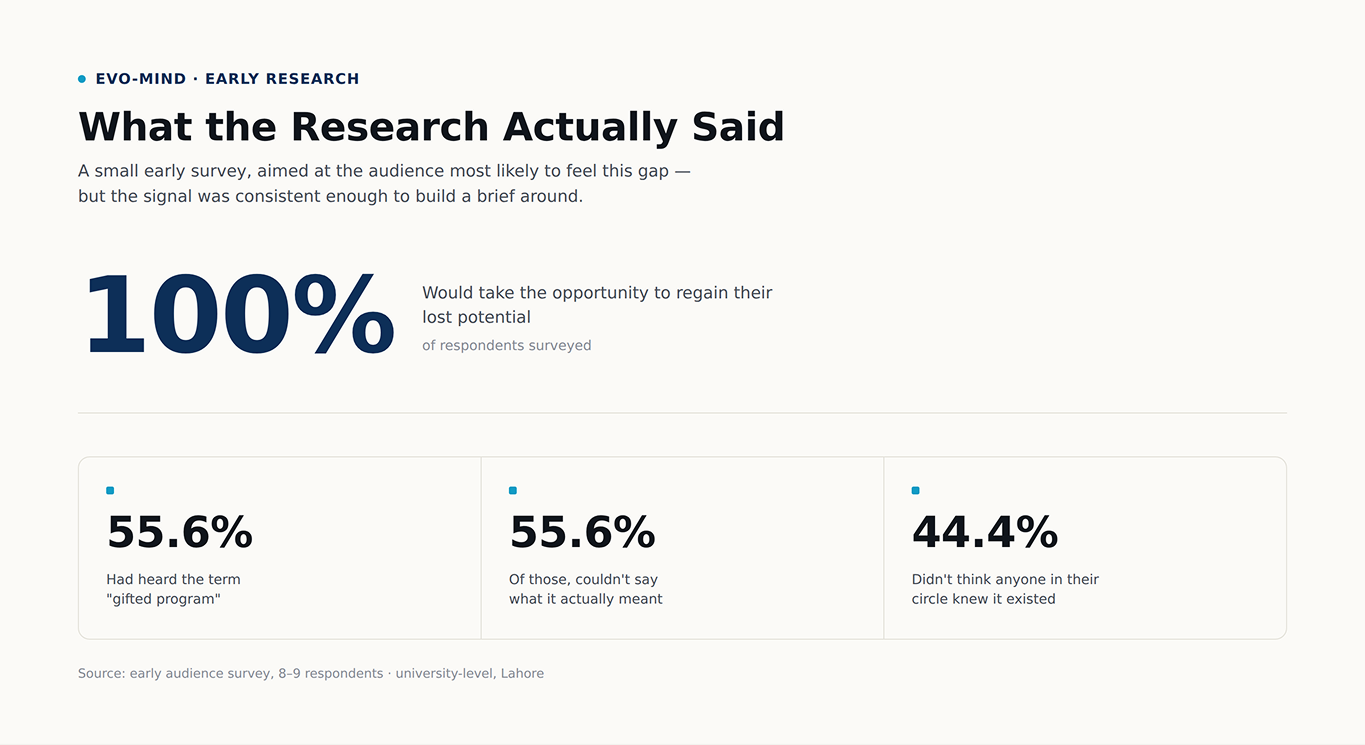
It was an early, small-scale survey, not a launch metric, but the signal was consistent. 100% of respondents said they’d take the chance to regain lost potential. Over half who’d heard the term “gifted program” couldn’t actually explain what it meant. Nobody in the sample had access to anything built for them, as an adult, to close that gap.
- The Thinking
Potential doesn't expire.
The assumption behind gifted programs is that intelligence stops being worth developing after a certain age. EVO-Mind starts from the opposite premise: that the door doesn’t close, it just stops having anything behind it. The brand, the app, and the content all exist to put something there.
Explore other projects

Randhawa
2026
Web Development
Print Media
Social Media
UI/UX Design
UI/UX Design
Content & Marketing
Olrich Beauty
2026
Content & Marketing
Social Media
Campaign Strategy
Brand Identity
Evo-Mind
2026
Content & Marketing
Social Media
Campaign Strategy
UI/UX Design